Dr. Lea Hildebrandt

Julius-Maximilians-Universität
Lehrstuhl für Psychologie I
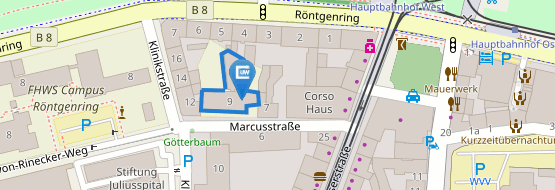
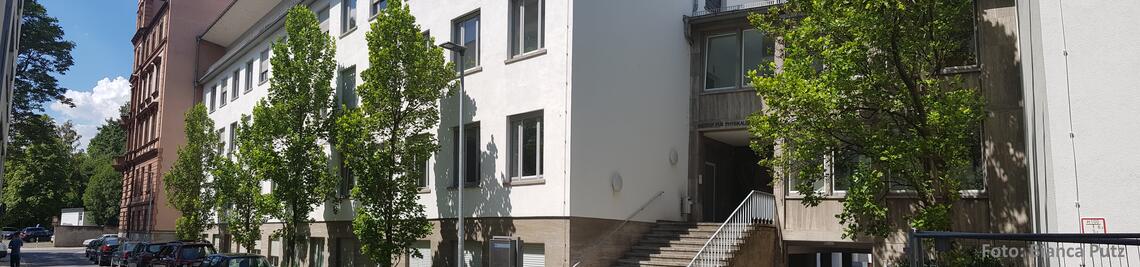
Marcusstr. 9-11
97070 Würzburg
Raum: 201
Telefon: +49 931 31- 85745
E-Mail: lea.hildebrandt@uni-wuerzburg.de
ORCID: 0000-0002-5513-3893
Google Scholar: https://tinyurl.com/drleahildebrandt
seit 03/2026 | Akademischer Rat am Lehrstuhl für Psychologie I in der Arbeitsgruppe Klinische Psychologie und Psychotherapie von Prof. Dr. Katja Bertsch |
seit 11/2021 | Wissenschaftliche Koordinatorin des Graduiertenkolleg 2660 |
seit 10/2016
| Wissenschaftlicher Mitarbeiter (Post-Doc) am Lehrstuhl für Psychologie I in der Arbeitsgruppe Experimentelle Klinische Psychologie von Prof. Dr. Matthias Gamer |
02/2018 | Promotion zum Dr. rer. nat. an der Humboldt Universität Berlin |
10/2012-09/2016 | Wissenschaftlicher Mitarbeiter am Max-Planck-Institut für Kognitions- und Neurowissenschaften, Abteilung für Soziale Neurowissenschaften von Prof. Dr. Tania Singer, Leipzig |
2010 - 2012 | Studium der Kognitiven Neurowissenschaften an der Universität Amsterdam, NL |
2006 - 2013 | Studium der Psychologie an der Universität Twente, NL |
- Emotionsregulation und Empathie in sozialen Interaktionen
- Naturalistische Forschungsmethoden: Virtual Reality und reale Interaktionskontexte
- Systemische Psychotherapieforschung und Wirksamkeit
Berlijn, A. M., Hildebrandt, L. K., & Gamer, M. (2022). Idiosyncratic viewing patterns of social scenes reflect individual preferences. Journal of Vision, 22(13), 10. https://doi.org/10.1167/jov.22.13.10 |
Hildebrandt, L. K., McCall, C., & Singer, T. (2019). Socioaffective versus sociocognitive mental trainings differentially affect emotion regulation strategies. Emotion, 19(8), 1329–1342. https://doi.org/10.1037/emo0000518 |
Hildebrandt, L. K., McCall, C., Engen, H. G., & Singer, T. (2016). Cognitive flexibility, heart rate variability, and resilience predict fine‐grained regulation of arousal during prolonged threat. Psychophysiology, 53(6), 880–890. https://doi.org/10.1111/psyp.12632 |