Lasting learning in physics II
Within the first funding phase of Lasting Learning in Physics (LLiPs), we tested whether combining constructive learning tasks—self-explanations paired with retrieval practice (constructive retrieval)—supports durable learning in complex physics instruction. We developed a tablet-based lesson format. After an introduction to the principles, learners studied examples. Learners then completed tasks that required either a description of the case (DP) or a principle-based self-explanation (SE). Tasks were completed either without access to materials during work (Closed-Book) or with access (Open-Book). We conducted three experiments during regular instruction on Newton’s laws in Grade 11. Findings indicate both promise and boundary conditions. In some cases, the combination did not promote durable learning as expected. The quality of self-explanations was often low. Learners frequently invested little effort. Benefits for preparation for future learning did not appear reliably. In one condition, a purely descriptive task with a retrieval requirement outperformed SE variants. Learning gains were most evident where learners invested high effort. A brief informed training increased time on task but did not consistently increase mental effort. In the second project phase, we will test variations to understand and leverage the boundary conditions of constructive retrieval. Based on theory and the obtained results, we propose three optimizations: (a) a clearly sequenced DP–SE support that raises self-explanation quality by focusing attention on principles; (b) modification of metacognitive monitoring via constructive retrieval with subsequent learner-driven regulation; (c) temporal distribution of learning sessions (spacing) to dose effort and foster consolidation. Eight weeks after the intervention, we will assess retention, conceptual understanding, and preparation for future learning. Process measures will include mental effort, retrieval success, self-explanation quality, judgments of learning, and clickstream logs. Our three core research questions are: (1) Does the combination of Closed-Book retrieval and sequenced DP–SE support increase durable understanding when retrieval success, effort, and SE quality are high? (2) Does providing a metacognitive regulation opportunity enhance the effectiveness of constructive retrieval by directing restudy toward memory-based versus understanding-based content? (3) Does spacing raise retrieval effort and thereby yield more stable retention, better understanding, and improved preparation for future learning?
Keywords: retrieval practice; generative learning; constructive retrieval; physics learning; lasting learning outcomes
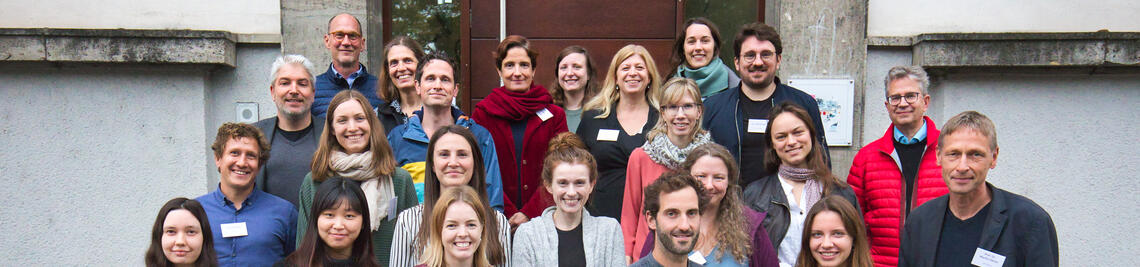
Click here to see our team.
2025
Keller, S. D., Markwalder, U., Endres, T., & Praetorius, A.-K. (2025). Die Unterstützung des Konsolidierens – Eine zentrale, aber vernachlässigte Dimension von Unterrichtsqualität [Supporting consolidation is a central but neglected dimension of teaching quality]. Unterrichtswissenschaft, 53, 153–177. https://doi.org/10.1007/s42010-025-00229-5 (open access)
Obergassel, N., Renkl, A., Endres, T., Nückles, M., Carpenter, S. K., & Roelle, J. (2025). Combining generative tasks and retrieval tasks. Journal of Educational Psychology. Advance online publication. https://dx.doi.org/10.1037/edu0000949 (open access)
von Aufschnaiter, C. v., Endres, T., & Petermann, V. (2025). Entwurf eines Interessenmodells für die Naturwissenschaften [Design of a model of interest for the natural sciences]. In O. Krey, S. Bernholt, D. Laumann, & T. Rabe (Eds.), Interesse revisited (pp. 223–254). Springer. https://doi.org/10.1007/978-3-658-48542-9_5
von Aufschnaiter, C. v., Vorholzer, A., Eitel, A., Endres, T., Lieck, D. S. N., Wahby, N., & Renkl, A. (2025). Weil die Bewegungskraft ja da hin zeigt – Wie die Darstellung von Pfeilen in der Mechanik irritieren und helfen kann [Because the force points that way – How the illustration of arrows in mechanics can confuse and support]. MNU Journal, 3, 243–250. https://doi.org/10.17605/OSF.IO/9BDNS
2024
Endres, T., & Eitel, A. (2024). Motivation brought to the test: Successful retrieval practice is modulated by mastery goal orientation and external rewards. Applied Cognitive Psychology, 38(1), 4160. https://doi.org/10.1002/acp.4160 (open access)
Endres, T., Carpenter, S., & Renkl, A. (2024). Constructive retrieval: Benefits for learning, motivation, and metacognitive monitoring. Learning and Instruction, 94, 101974. https://doi.org/10.1016/j.learninstruc.2024.101974 (open access)
Grund, A., Fries, S., Nückles, M., Renkl, A., & Roelle, J. (2024). When is learning “effortful”? Scrutinizing the concept of mental effort in cognitively-oriented research from a motivational perspective. Educational Psychology Review, 36, Article 11. https://doi.org/10.1007/s10648-024-09852-7 (open access)
2023
Endres, T., Kubik, V., Koslowski, K., Hahne, F., & Renkl, A. (2023). Immediate benefits of retrieval tasks: On the role of self-regulated relearning, metacognition, and motivation. Zeitschrift für Entwicklungspsychologie und Pädagogische Psychologie [German Journal of Developmental and Educational Psychology], 55(2–3), 49–66. https://doi.org/10.1026/0049-8637/a000280 (open access)
Roelle, J., Endres, T., Abel, R., Obergassel, N., Nückles, M., & Renkl, A. (2023). Happy together? On the relationship between research on retrieval practice and generative learning using the case of follow-up learning tasks. Educational Psychology Review, 35, Article 102. https://doi.org/10.1007/s10648-023-09810-9 (open access)
2022
Richter, T., Berger, R., Ebersbach, M., Eitel, A., Endres, T., Borromeo Ferri, R., Hänze, M., Lachner, A., Leutner, D., Lipowsky, F., Nemeth, L., Renkl, A., Roelle, J., Rummer R., Scheiter, K., Schweppe, J., von Aufschnaiter, C., & Vorholzer, A. (2022). How to promote lasting learning in schools: Theoretical approaches and an agenda for research. Zeitschrift für Entwicklungspsychologie und Pädagogische Psychologie [German Journal of Developmental Psychology and Educational Psychology], 54(4), 135–141. https://doi.org/10.1026/0049-8637/a000258 (open access)
Roelle, J., Endres, T., & Renkl, A. (2022). Wie können Abrufübungen (nicht) für das Lernen in Schule und Hochschule relevant gemacht werden? Einleitung zur Thematik des Thementeils [How can retrieval practice (not) be made relevant for learning in school and higher education? Introduction]. Unterrichtswissenschaft, 50, 1–15. https://doi.org/10.1007/s42010-021-00139-2
Roelle, J., Schweppe, J., Endres, T., Lachner, A., von Aufschnaiter, C., Renkl, A., Eitel. A., Leutner D., Rummer, R., Scheiter, K., & Vorholzer, A., (2022) Combining retrieval practice and generative learning in educational contexts: Promises and challenges. Zeitschrift für Entwicklungspsychologie und Pädagogische Psychologie [German Journal of Developmental and Educational Psychology], 54(4), 142–150. https://doi.org/10.1026/0049-8637/a000261 (open access)


Here are a few impressions from our recent data collection for the Lasting Learning in Physics by Constructive Retrieval research project. We are excited to collaborate with some amazing schools and teachers to be able to do research within a real classroom setting and to gain many valuable insights from these collaborations. This marks the second of three data collections for this longitudinal study, and the third study conducted as part of our research project.
Go to main page