Lasting learning in physics through problem exploration and adaptive practice
Complex physics concepts are typically acquired across several interconnected learning phases. We distinguish conceptual, procedural, and situational knowledge as interdependent knowledge types that jointly build lasting, flexibly applicable understanding. We explore how instructional design supports these forms of knowledge. For the acquisition of conceptual knowledge about the motion of charge carriers in electric and magnetic fields, we test a problem-first approach that combines initial problem exploration with a serious game followed by instruction. For the acquisition of procedural knowledge (applying rules) and situational knowledge (nowing when and where the rules apply), we investigate when interleaved practice (vs. blocked practice) is beneficial. The key findings from the first project phase are as follows: (1) The sequence of problem exploration and instruction showed no effect on learning outcomes; nor were there significant performance differences between collaborative dyads and individual learning. Motivationally, the data favored both collaboration and initial problem exploration. (2) When practicing different rules for electric and magnetic fields, a practice format × social format interaction emerged in both the immediate posttest and the 8-week follow-up: collaboration improved learning outcomes only when combined with interleaved practice, not under blocked practice. Neither interleaved practice nor collaboration alone improved learning outcomes. (3) In individual learning, there was an interaction with prior knowledge: the higher the prior knowledge, the greater the benefit from interleaved practice; the lower the prior knowledge, the greater the benefit from blocked practice. Building on this, we address two focal areas in the second project phase: – For the acquisition of conceptual knowledge, we test whether repeated (rather than single) problem-first explorations lead to deeper and more lasting understanding. – For the acquisition of procedural and situational knowledge, we clarify the conditions under which interleaved practice is effective and test two targeted instructional supports: (1) a performance-adaptive switch from blocked to interleaved practice to reduce initial difficulties among learners with lower prior knowledge; (2) adaptive metacognitive prompts that initiate and sustain self-regulation during individual practice with the serious game. Design of the planned studies: Two studies on the problem-first approach will be conducted collaboratively in dyads; the first systematically prepares the second experimental study. Two studies on interleaved practice will be conducted individually and are experimental in design (adaptive interleaving and metacognitive prompts). The overarching aim of the four studies is to identify robust principles for instructional design in physics education that promote lasting and flexibly applicable learning for all students.
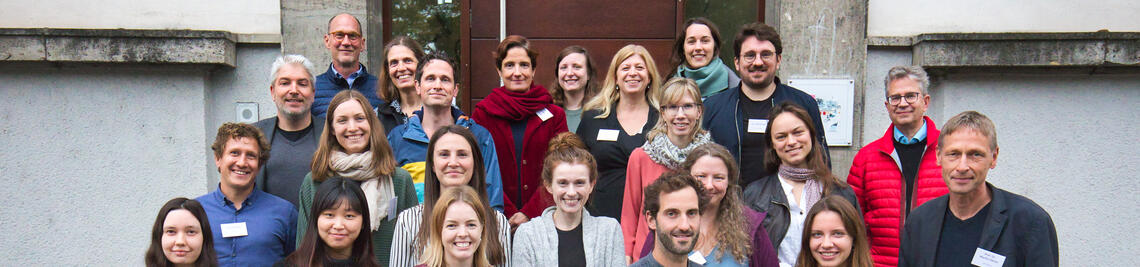
Click here to see our team.
Preprints/Submitted
Danzglock, M., Berger, R., Hänze, M. (2025). The limits of interleaving: How prior knowledge influences learning success in complex physics topics. PsyArXiv Preprint. https://doi.org/10.31234/osf.io/m46vf_v1
2026
Danzglock, M., Berger, R., & Hänze, M. (2026). Interleaved practice in physics benefits from collaboration. Learning and Instruction, 102, 102307. https://doi.org/10.1016/j.learninstruc.2025.102307
2025
Hänze, M., Jurkowski, S., Mundelsee, L., & Danzglock, M. (2025). Lernen in Gruppen. utb. https://doi.org/10.36198/9783838564173
2024
Danzglock, M. & Hänze, M. (2024). Benefits of problem-solving first for the success of cooperative learning with videos. The Journal of Experimental Education, 94(1), 67–84. https://doi.org/10.1080/00220973.2024.2379542
Jurkowski, S., Mundelsee, L., & Hänze, M. (2024). Strengthening collaborative learning in secondary school: Development and evaluation of a lesson-integrated training approach for transactive communication. Learning and Instruction, 92, 101934. https://doi.org/10.1016/j.learninstruc.2024.101934
2022
Hänze, M., & Leiss, D. (2022). Using heuristic worked examples to promote solving of reality-based tasks in mathematics in lower secondary school. Instructional Science, 50, 529–549. https://doi.org/10.1007/s11251-022-09583-8
Go to main page