Interleaved learning with verbal materials II
In many academic domains, concepts and rules are introduced through explicit instruction, yet their mastery relies on extensive practice with aligned examples. Research shows that interleaving exemplars or tasks from different categories or concepts is superior to presenting them in a blocked fashion when the concepts are difficult to discriminate. Although consistent benefits of interleaving have been demonstrated for certain types of materials (e.g., paintings), findings for verbal materials, such as isolated words or expository texts, remain inconclusive. Moreover, existing studies have been conducted with adult participants and assessed learning only immediately or after short delays, leaving open the question of whether interleaving fosters lasting learning in a school context. During the first funding period, we examined interleaving in spelling (two published studies), reading (ongoing), and text learning (ongoing) with educationally relevant material for primary and secondary school children, as well as in Japanese foreign language learning (two ongoing studies). We also conducted a meta-analysis on interleaving with verbal materials and are currently conducting a content analysis on the sequencing of activities in German spelling workbooks. All studies conducted strictly adhere to open science practices. Overall, interleaving emerged as a desirable difficulty, producing better outcomes than blocking on immediate and delayed tests up to eight weeks. Prior knowledge proved central for long-term transfer. Instructional guidance—explanations highlighting relevant distinctions between concepts—further enhanced interleaved learning for learners with high prior knowledge but overloaded those with low prior knowledge. Building on these findings, the research proposed for the second funding period will pursue three main objectives. First, we will examine the role of prior knowledge and the interplay between deductive and inductive elements. Results from the first funding period suggest that largely inductive settings may be suboptimal for verbal materials; providing learners with a knowledge base through explicit instruction may allow them to reach consolidation earlier and benefit more fully from interleaving. Second, we will investigate the cognitive processes underlying the effectiveness of interleaving, focusing on the transition from acquisition to consolidation and the relevance of this progress for lasting learning. Third, we will investigate how instructional guidance, particularly explicit guidance at the start of practice and self-explanations, can enhance interleaved practice, taking into account differences in learners’ prior knowledge. To address these objectives, we will conduct four experimental classroom intervention studies in reading, spelling acquisition, and learning from text, as well as one eye-tracking study in the school context.
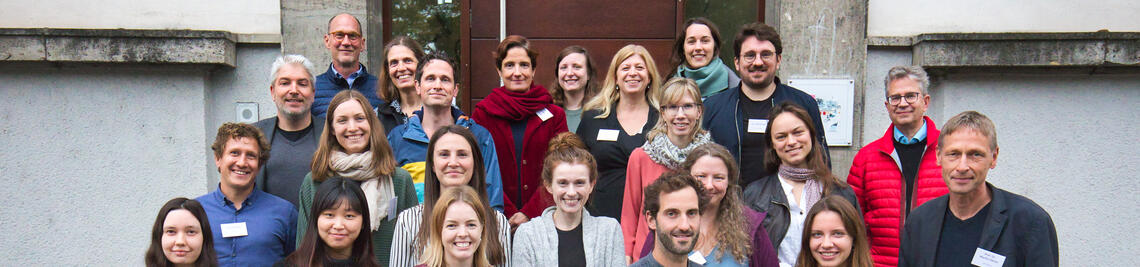
Click here to see our team.
Preprints/ Submitted
Klimovich, M., Kubik, V., & Richter, T. (2026). Interleaved practice as a tool for scientific concept formation. Manuscript submitted for publication.
Klimovich, M., Rouet, J.-F., & Richter, T. (2026). Mind wandering during first- and foreign-language reading. Manuscript submitted for publication.
2025
Dahdah, P., Naumann, J., Haffmans, M.-B., Schindler, J., & Richter, T. (2025). Development of the retrieval of word meanings and its impact on reading comprehension throughout elementary school: A longitudinal study. Journal of Educational Psychology. (in press)
Klimovich, M., & Richter, T. (2025). Spelling acquisition in children through interleaved practice: The role of instructional guidance. Cognitive Research: Principles and Implications, 10, Article 68. https://doi.org/10.1186/s41235-025-00680-z
Klimovich, M., & Richter, T. (2025). Using interleaved practice to foster spelling acquisition. Learning and Instruction, 98, Article 102146. https://doi.org/10.1016/j.learninstruc.2025.102146 (open access)
Richter, T., & Kubik, V. (2025). Wissenserwerb [Knowledge acquisition]. In D. Urhahne, M. Dresel & F. Fischer (Eds.), Psychologie für den Lehrberuf [Psychology of the Teacher] (2nd ed. pp. 71–90). Berlin: Springer.
Roelle, J., & Richter, T. (2025). Üben aus lernpsychologischer Sicht: Wie kann Üben das nachhaltige Lernen fördern? [Practice from the perspective of the psychology of learning: How can practice promote lasting learning?]. Unterrichtswissenschaft, 53, 179–204. https://doi.org/10.1007/s42010-025-00227-7 (open access)
Schindler, J., & Richter, T. (2025). Does text generation improve learning from expository text? A conceptual replication attempt. Cognitive Research: Principles and Implications, 10, Article 34. https://doi.org/10.1186/s41235-025-00645-2 (open access)
2024
Klimovich, M., & Richter, T. (2024). Metacognitive training can reduce mindless reading. Journal of Educational Psychology, 116(5), 836–852. https://doi.org/10.1037/edu0000884 (open access)
Schindler, J., Richter, T., & Mar, R. (2024). Does generation benefit learning from narrative and expository texts? A direct replication attempt. Applied Cognitive Psychology, 38(4), e4230. http://dx.doi.org/10.1002/acp.4230 (open access)
2023
Glaser, J., & Richter, T. (2023). The testing effect in the lecture hall: Does it transfer to content studied but not practiced? Teaching of Psychology, 52(1). https://doi.org/10.1177/00986283231218943 (open access)
Schindler, J., & Richter, T. (2023). Text generation benefits learning: A meta-analytic review. Educational Psychology Review, 35, 44. https://doi.org/10.1007/s10648-023-09758-w (open access)
Go to main page